

Central Texas time
It is late. Here is what to do.
We respond 24 hours a day. Send your request and a team member will call you back within 90 minutes.
If anyone is in danger, or there is fire, smoke, or a gas smell, leave and call 911 first.
- 1
Shut off the water.
Close the main valve, usually near the street, in the garage, or where the line enters the house. If the leak is from one fixture, close its valve.
- 2
Make the wet rooms safe.
Turn off power to wet rooms at the breaker, but only if you can reach it without standing in water. Move people and pets out of those rooms.
- 3
Record it, then send the form.
Take a slow video of every wet room before you move anything. Then send the short form on this page and a team member will call you back within 90 minutes.
- 1
Stay out until it is cleared.
Do not go back in until the fire department says it is safe. If you smell smoke and do not know where it is coming from, call 911.
- 2
Leave the soot alone.
Keep the heating and cooling system off. Do not wipe walls or run fans. Wiping pushes soot deeper into paint and fabric.
- 3
Record it, then send the form.
From a safe spot, take photos and video. Then send the short form on this page and a team member will call you back within 90 minutes. We can arrange board-up and tarping to secure the property.
Entry 01 / Central Texas
Water or fire damage right now?
We respond 24 hours a day. Send the short form and a team member will call you back within 90 minutes. We talk you through the first steps, then come out, look at the damage, and give you an honest assessment. From that first conversation, everything is written down.
Open a fileRequest a call backIf anyone is in danger, leave the property and call 911 first.
Open a file: we call you back
Section 01
Disciplines
Fire, water, and contents restoration
111 Restoration is a New Braunfels-based restoration company that handles water damage mitigation, fire and smoke mitigation, and contents pack-out, storage, cleaning, and pack-back for Central Texas homes and commercial properties. We document every step so property owners and adjusters can review the work.
- 01
Water damage mitigation and restoration
Burst pipes, failed supply lines, appliance leaks, and storm water. Extraction, structural drying with our own equipment, moisture readings, and a written record of each visit.
Open the water sheet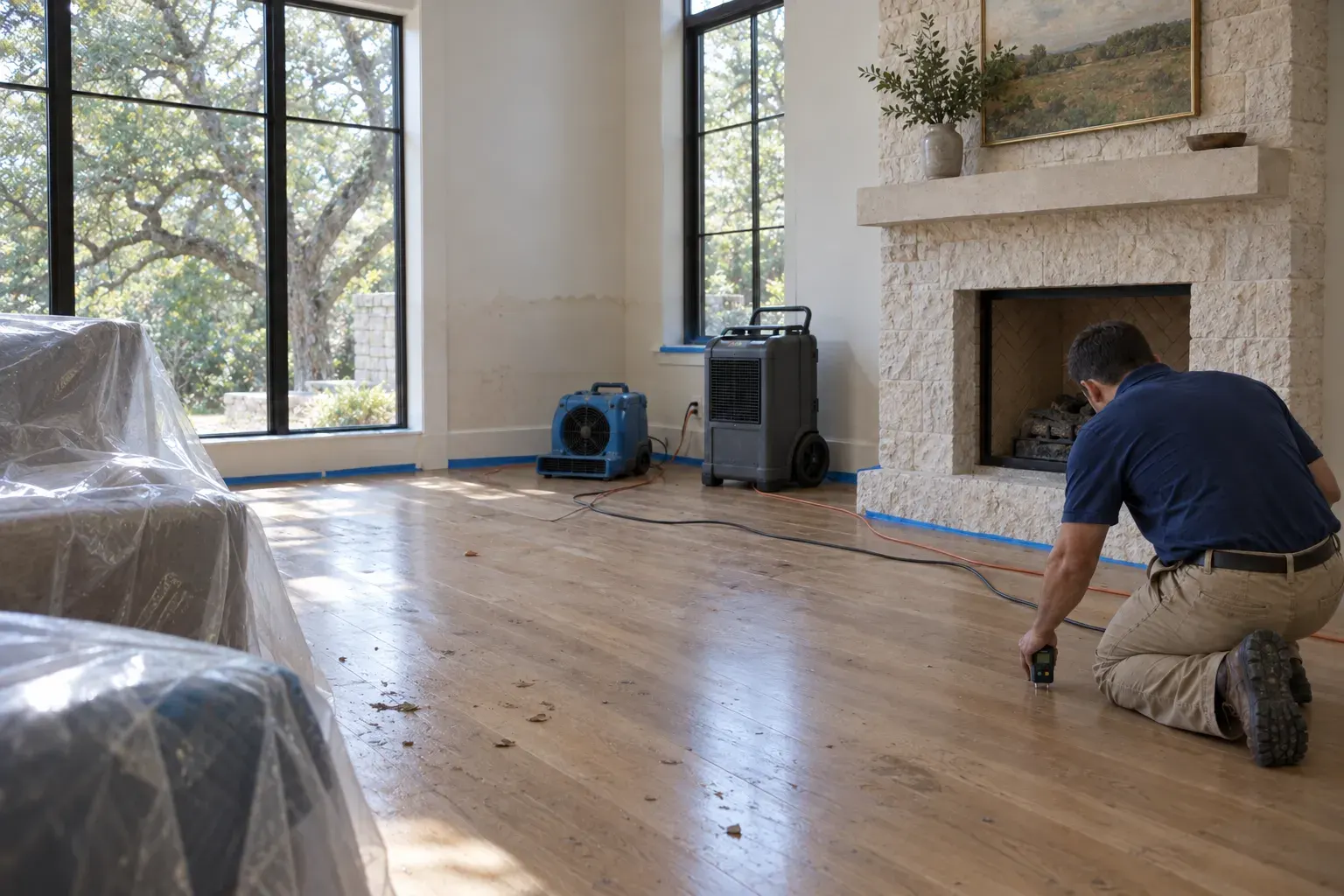
- 02
Fire and smoke mitigation and restoration
Board-up and tarping, soot and smoke residue cleaning, odor control, and containment that protects the rooms the fire did not reach.
Open the fire sheet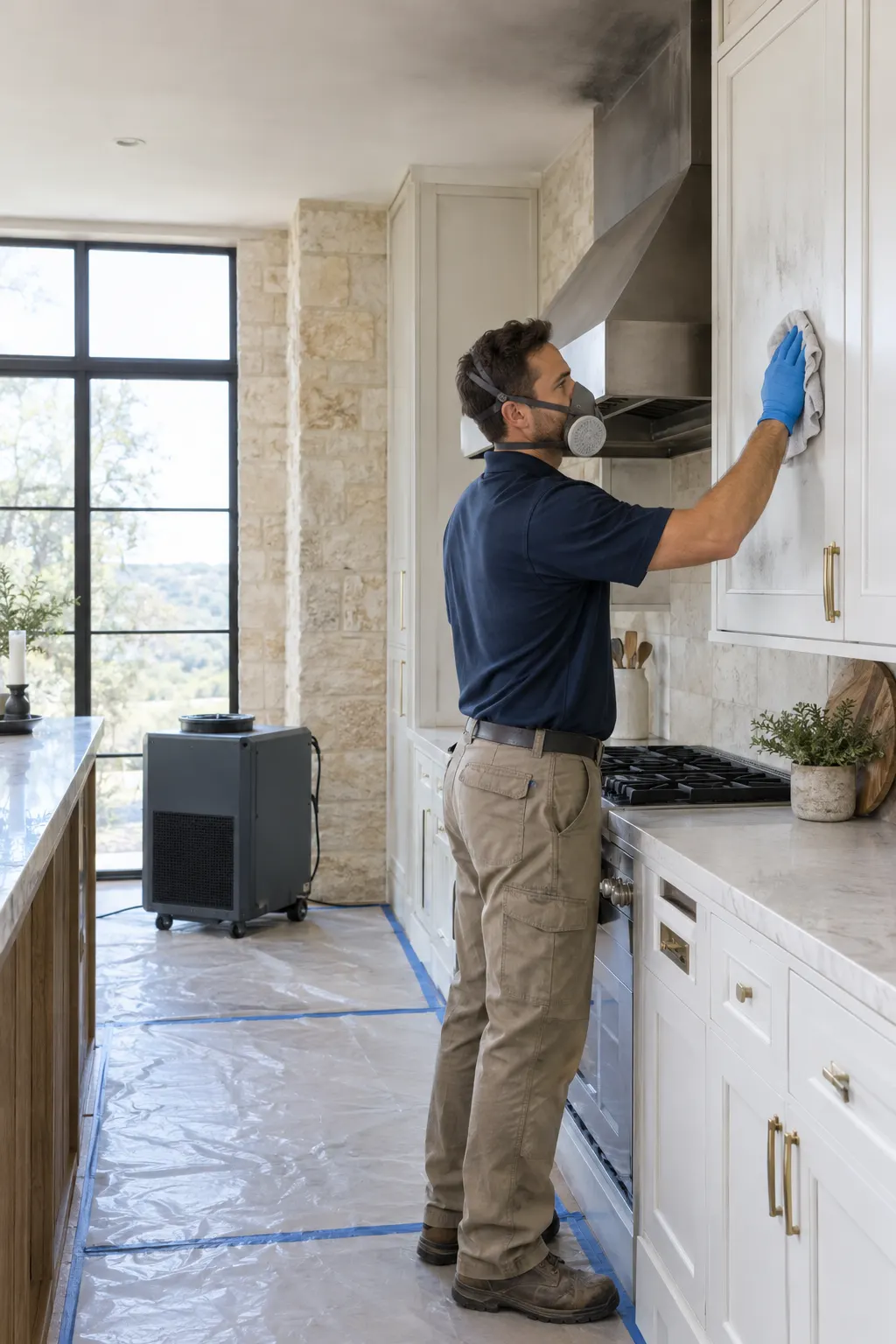
- 03
Contents pack-out, storage, and pack-back
Room-by-room inventory, careful pack-out, climate-controlled storage, cleaning, deodorization, furniture handling, and pack-back to the right room.
Open the contents sheet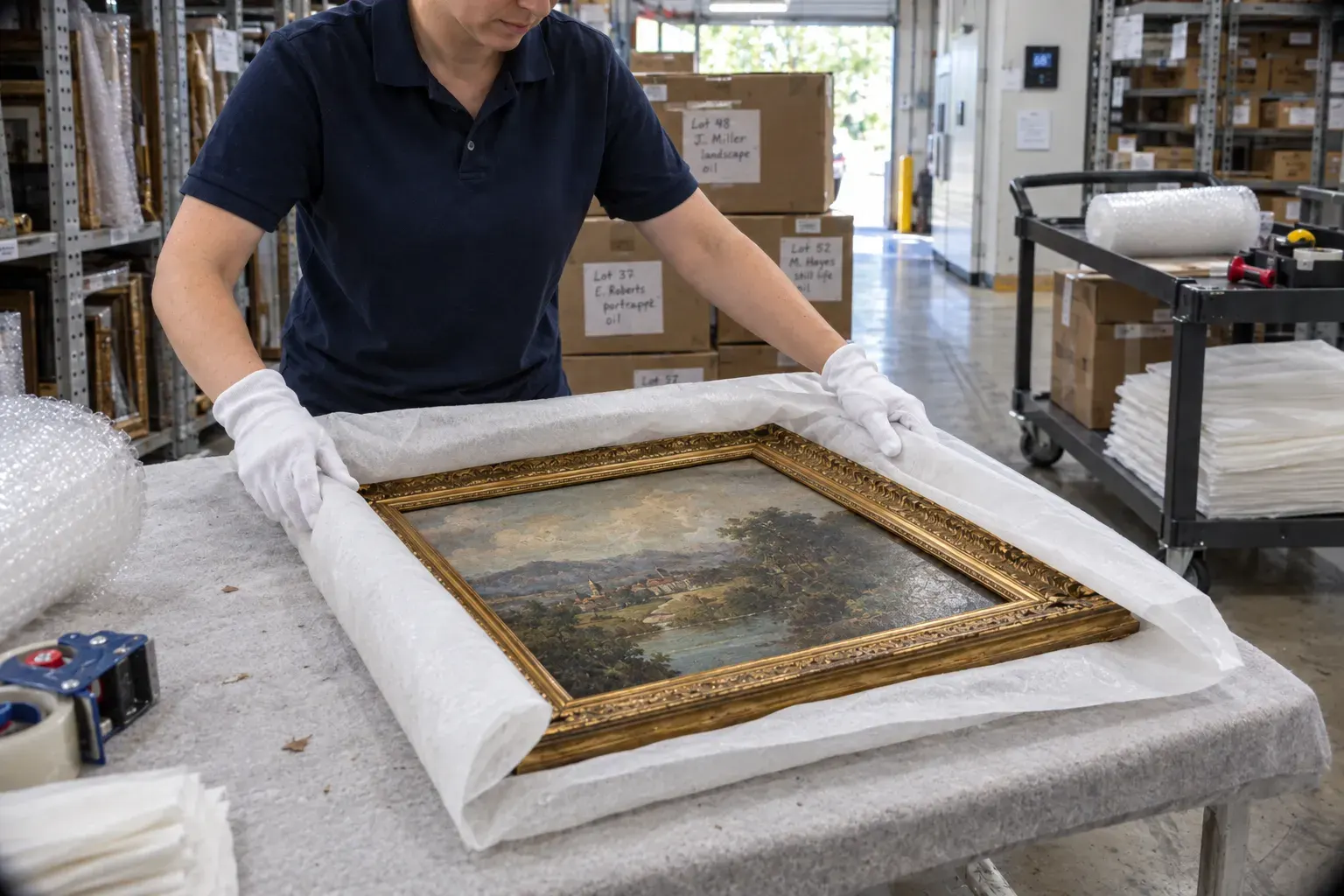
Section 02
First hour
What to do while you wait
Tick each step as you go. People first, then the house, then the record.
Immediate steps after water damage
- Step 1Leave any room that does not feel safe.Sagging ceilings, standing water near outlets, and outside flood water are real hazards.
- Step 2Stop the water.Close the main shutoff valve, or the valve on the supply line that failed.
- Step 3Turn off power to wet rooms.At the breaker, but only if you can reach the panel without standing in water.
- Step 4Send the call-back form.A team member will call you back within 90 minutes. Write down the time you first saw the water.
- Step 5Record video, then photos.Walk every affected room before you move anything.
- Step 6Lift what you can safely lift.Move rugs, art, documents, and electronics to a dry room.
Please do not
Use a household vacuum on standing water.
Walk into a room where water is near outlets or cords.
Throw away damaged items before they are photographed and listed.
Turn on central heat or air before the system is checked, if water reached ducts or returns.
Make permanent repairs before your insurance company has seen the damage.
Immediate steps after a fire
- Step 1Stay out until the fire department says it is safe.The structure and wiring may be damaged, and smoke and soot can still be in the air.
- Step 2Send the call-back form.A team member will call you back within 90 minutes. We can arrange board-up and tarping to secure the home.
- Step 3Record what you see from safe areas.Video first, then photos of each room and any visible residue.
- Step 4Collect essentials only.If you are allowed back in: medication, documents, keys, and phones.
- Step 5Keep doors to unaffected rooms closed.This limits how far smoke odor travels.
Please do not
Wipe soot from walls, fabric, or art. It can smear and set into the surface.
Run the central air system until it has been inspected.
Eat food or use medicine that was exposed to heat, smoke, or water.
Try to clean or switch on electronics that were near heat or smoke.
Immediate steps after storm damage
- Step 1Keep everyone away from downed lines and damaged limbs.Call your electric utility for any line on the ground.
- Step 2Do not drive or walk into flood water.Wait until roads and crossings are reopened.
- Step 3Send the call-back form.A team member will call you back within 90 minutes. We can arrange tarping and temporary protection of openings.
- Step 4Catch active drips.Use buckets and move belongings away from wet ceilings.
- Step 5Record the damage.Outside and inside, before anything is moved.
Please do not
Climb onto a wet or damaged roof.
Stand under a ceiling that is sagging or holding water.
Remove a tree from the structure yourself.
Section 03
Moisture map
Proof is how we document
We do not publish reviews or project counts. What we can show you is the record we keep on every job, starting with readings taken at the same marked points on each visit.
Point B4
- Visit 1
- wet
- Visit 2
- drying
- Visit 3
- at goal
- Material
- base cabinet
Tap a reading point or choose a visit. Each point carries its own history, so you and your adjuster can see the drying, not just be told about it.Readings at the same points, every visit.
Documented from the first visit
The starting condition is recorded on video and in photos before equipment goes in, so the file shows what was found, not only what was done.
Our own drying equipment
Drying equipment belongs to 111 and is placed, checked, and removed by our team members.
Climate-controlled storage
Packed-out contents are kept in a climate-controlled storage facility until the home is ready.
Section 04
The closeout file
A file you can hand to anyone
Whether the work is paid through insurance or privately, you receive a clear record of what was found and what was done.
| No. | Document | What it shows | Recorded |
|---|---|---|---|
| 01 | Initial video walk-through | The starting condition of every affected room. | First visit, before equipment |
| 02 | Room-by-room photographs | Before, during, and after, labeled by room. | Every visit |
| 03 | Moisture map and readings | Marked points and the reading at each one, over time. | Every visit |
| 04 | Drying equipment log | What was placed, where, and when it was removed. | Placement and removal |
| 05 | Written scope | Line items of the mitigation work, in plain language. | Before work starts |
| 06 | Contents inventory | Each item listed, photographed, and tracked by room. | Pack-out to pack-back |
| 07 | Non-salvageable list | Items that cannot be restored, photographed before disposal. | As found |
| 08 | Signed completion record | Your sign-off that the work is done. | Closeout |
We document for whoever needs to review the work: you, your adjuster, or a buyer. We do not interpret policies or negotiate claims, and coverage decisions belong to your insurance company.
Section 05
Contents
Every item gets a tag
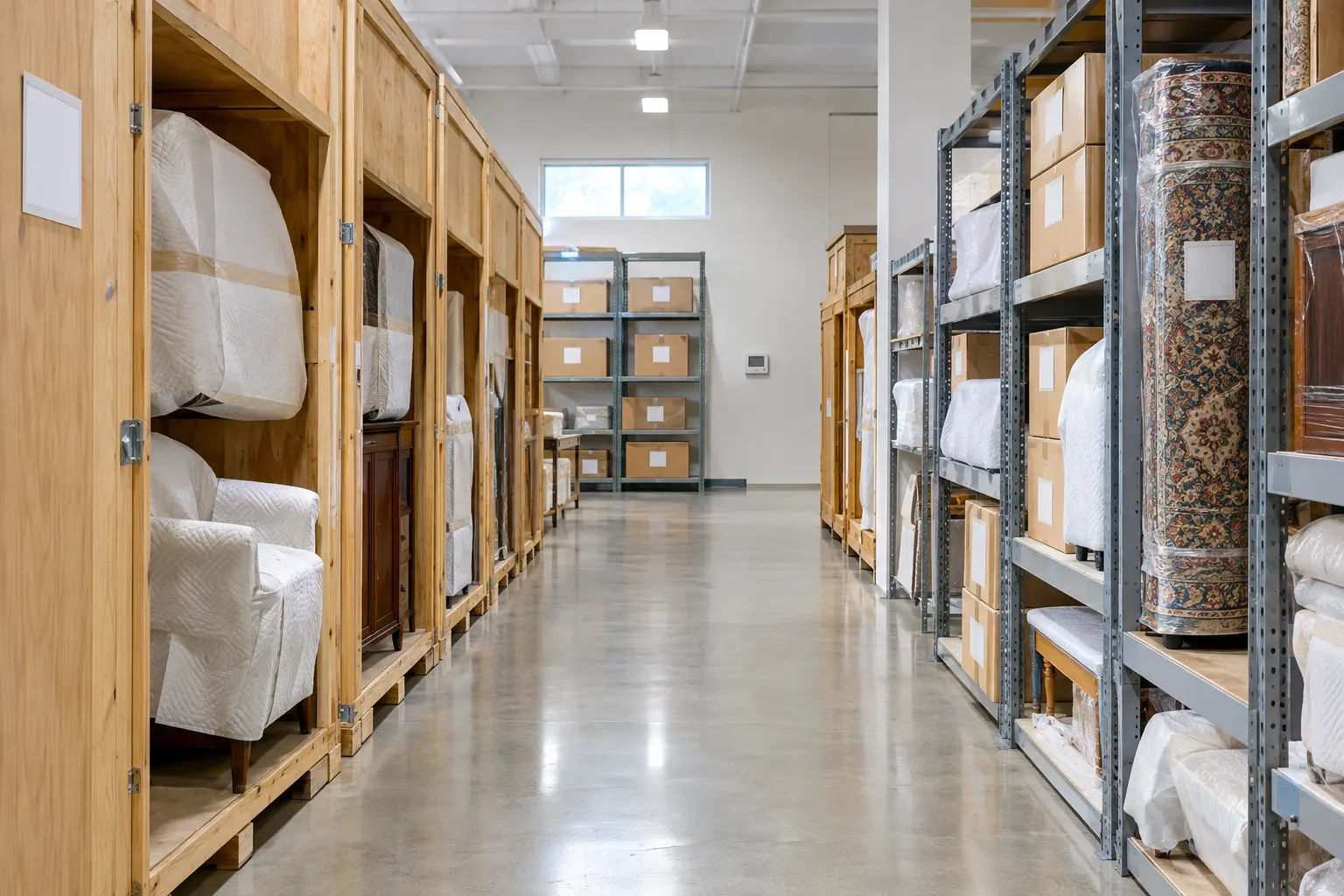
Contents are handled in six separate stages: pack-out, storage, cleaning, deodorization, furniture handling, and pack-back. Each is recorded on its own so it can be reviewed on its own.
Kept, not just stored
Art, rugs, antiques, wardrobes, and family pieces deserve as much care as the structure. While the home is dried and repaired, belongings stay in a climate-controlled storage facility, organized by room.
- Organized by room and box
- Located on request
- Returned against the inventory
Section 06
Distribution
Who the file is for
Homeowners first, and the professionals who look after property.
To: Homeowners
Calm guidance in the first hour, an honest assessment, and one point of contact from mitigation to closeout. Fine finishes, stone, millwork, and collections are handled with the care they need.
What to expectCopy: Property managers and realtors
Clear communication with owners, tenants, and buyers, with photo documentation that answers the questions people ask after a leak.
For property professionalsCopy: Adjusters and agents
A consistent file with readings, photos, a line-item scope, and separable contents stages. We document. We do not advocate or negotiate.
Our documentation standardSection 07
Coverage
New Braunfels-based, serving Central Texas
From the Guadalupe and Comal rivers to the Hill Country and the Austin area. Choose your city for local information.
Section 08
Reference
Guides for the worst night of the year
FAQ
Common questions
Who should I contact first after water or fire damage, 111 or my insurance company?
If the damage is still happening, stop the source if it is safe and request emergency mitigation first, because waiting can let the damage spread. Then notify your insurance company as soon as you can. The Texas Department of Insurance advises telling your company as soon as possible and taking photos or video before repairs. Your insurance company decides coverage under your policy.
What happens on the first visit?
We send a team member to look at the damage and give you an honest assessment of what we see and what we recommend, so you can decide what to do next.
Do you work with insurance claims?
Yes. Much of our work is part of a property insurance claim, and private-pay work is welcome too. We document the damage and the work so your adjuster can review it. We are not a public adjuster, and we do not negotiate claims or interpret policies.
What areas do you serve?
111 Restoration is New Braunfels-based and serves Central Texas, including San Antonio, Boerne, San Marcos, Wimberley, Dripping Springs, Austin, Lakeway, Georgetown, Round Rock, and nearby Hill Country communities.
Open a file
Water or fire damage? Talk to a team member.
We respond 24 hours a day. Send the short form and a team member will call you back within 90 minutes. We come out, look at the damage, and give you an honest assessment. There is no pressure to sign anything on the first visit.
What goes in your file
- 01An honest assessment. A team member looks at the damage in person and tells you plainly what we see and what we recommend.
- 02A written scope before work starts. You know what we plan to do and why, and you can share it with your insurance company.
- 03Photo and video documentation. Every affected area is recorded before, during, and after the work.
- 04Moisture readings and drying records. Logged on each visit until materials reach their drying goals.
- 05A room-by-room contents inventory. When contents are packed out, each item is listed, photographed, and tracked.
- 06A closeout file. Photos, readings, inventory, scope, and the signed completion record in one place.
Intake sheetForm 111-A
Request a call back
Tell us where and what happened. Required fields are marked.